

Audio Version:
Br. Dr. Jill Glasspool Malone and Robert W. Malone
Proposed Federal Policy: A Presidential Executive Order to End Preharvest Chemical Desiccation
President Donald Trump should immediately sign an Executive Order under the Make America Healthy Again (MAHA) initiative directing the EPA and USDA to implement a three-year phaseout of routine preharvest chemical desiccation of food crops.
This would include preharvest uses of glyphosate, paraquat, diquat, and other herbicides and chemical desiccants registered for this purpose. EPA should initiate the regulatory process to withdraw these uses from pesticide registrations, while USDA assists farmers in transitioning to established nonchemical harvesting methods.
The policy would specifically target chemical applications immediately before harvest, without prohibiting herbicide use for weed management during the growing season or interfering with no-till agriculture.
Its objectives are straightforward: reduce pesticide residues in America’s food supply, lower unnecessary human exposure, and protect soil health, waterways, and wildlife.
President Trump can initiate this policy immediately through executive action, with the agencies completing the necessary regulatory procedures during the three-year transition. American farmers harvested crops without these chemicals for generations. They can do so again
For generations, American farmers grew wheat, oats, soybeans, and other food crops, allowed them to mature, and harvested them without spraying herbicides over the fields shortly before bringing the crops into the food supply. They relied on natural maturation, field drying, swathing, and mechanical harvesting. These methods were not primitive relics of an agricultural past. They were practical techniques that helped feed a growing nation, and many remain in use today. In fact, organic farmers still routinely use these methods to dry crops prior to processing.
Then came another agricultural innovation, one that promised farmers greater convenience, more predictable harvest schedules, and potentially lower operating costs. Instead of waiting for crops to dry naturally, farmers could apply chemical herbicides shortly before harvest to kill remaining green vegetation, accelerate drying, or make harvesting more uniform.
The practice is called preharvest chemical desiccation. Glyphosate, the active ingredient historically associated with Roundup, is among the chemicals used for this purpose. Others include paraquat, diquat, sodium chlorate, saflufenacil, and carfentrazone, depending on the crop and the product’s regulatory approval.
What began as a specialized agricultural technique has become an established harvest-management practice in American agriculture. Yet the American public has received remarkably little information about how frequently these chemicals are applied immediately before food crops are harvested, what residues remain, or whether the benefits justify the additional chemical exposure.
This all needs to change.
This is not an argument for eliminating all herbicides from American agriculture at this point in time. Nor is it an argument about genetically modified crops, conventional weed management, or the use of herbicides to terminate cover crops before planting. Those are separate issues.
This is about one specific practice: spraying herbicides onto crops shortly before harvesting them for food.
It is an agricultural practice we can reconsider and phase out without reinventing farming.
How Did This Become Normal?
Chemical crop desiccation became normalized during the 1980s and 1990s, when preharvest glyphosate applications became established in certain grain-producing regions. Charles Benbrook’s 2016 peer-reviewed analysis, Trends in Glyphosate Herbicide Use in the United States and Globally, identified increasing harvest-aid applications beginning in the mid-2000s, particularly involving wheat, barley, edible beans, and other crops in northern states.
The growth of glyphosate use overall was extraordinary. Estimated U.S. agricultural use increased from approximately 7.7 million pounds of active ingredient in 1990 to nearly 250 million pounds in 2014, an increase of more than thirtyfold.
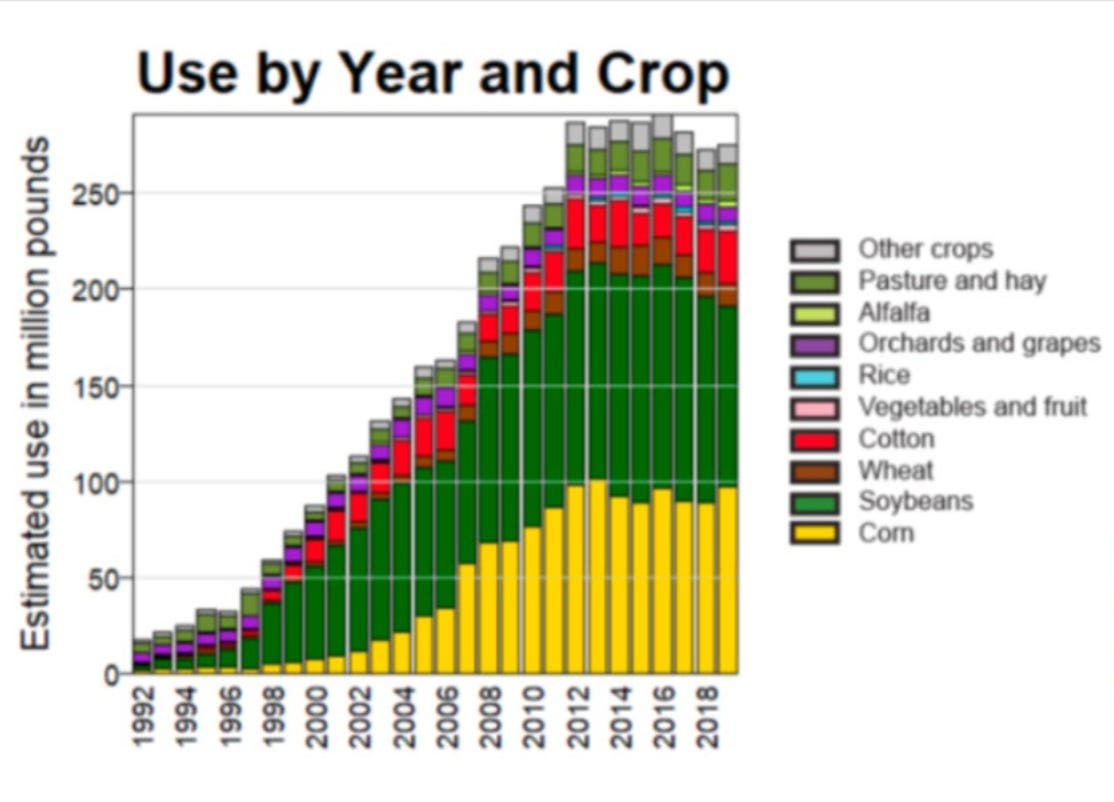
Not all of that increase involves preharvest desiccation. Much of glyphosate use is associated with weed management, including the adoption of glyphosate-tolerant crops. It would be inaccurate to attribute the entire increase to spraying immediately before harvest.
Nevertheless, the expansion of preharvest applications was part of a larger transformation in American agriculture, one in which chemical intervention increasingly replaced traditional management practices.
There is a revealing gap in the federal data. USDA surveys report how many acres receive particular herbicides, how much is applied, and which crops are treated. But the publicly available national summaries do not consistently distinguish preharvest applications from herbicide treatments earlier in the growing season.
Consequently, we cannot confidently state what percentage of American wheat, oats, or soybeans receives preharvest chemical desiccation in any given year.
That is not a minor omission. It means the public cannot easily determine how widespread the practice has become, despite its potential implications for food residues and environmental exposure.
And it raises an obvious question: Why isn’t USDA routinely publishing those numbers?
These Chemicals Are Applied When Food Is Nearly Ready to Harvest
The timing is what makes preharvest desiccation different from many other agricultural pesticide applications.
When herbicides are applied earlier in the growing season, there may be weeks or months before harvest. Environmental degradation, plant metabolism, and dew and rainwater runoff that remove or dilute the chemicals can affect the eventual residue concentrations.
Preharvest applications are left on the crop.
For example, some EPA-approved glyphosate labels permit applications to mature wheat with a minimum interval of seven days before harvest. Glyphosate may be applied to a standing food crop approximately one week before it enters the harvesting process.
Glyphosate is a systemic herbicide. It can be absorbed by plants and transported through their tissues. Consequently, residues cannot necessarily be eliminated by rainfall, washing, or removing material from the surface of the grain just prior to harvest.
Other herbicides have different chemical properties, environmental behavior, and residue profiles. Paraquat and diquat are contact herbicides, while sodium chlorate and saflufenacil operate through different mechanisms. Their risks cannot simply be assumed to be identical to glyphosate’s.
But the common question remains: Why apply these chemicals to food crops at the very end of their growing cycle when the primary benefit is often harvest management rather than increased biological production?
A mature wheat plant does not produce additional grain because it has been sprayed with glyphosate. In other words, these chemicals are not indispensable to producing the crop. They are tools used to manage the harvest.
That distinction should be central to any serious regulatory assessment.
Americans Are Excreting Glyphosate
In 2022, the CDC published biomonitoring findings showing that glyphosate was detectable in the urine of approximately 81 percent of Americans represented by its 2013–2014 National Health and Nutrition Examination Survey samples. This means that exposure was widespread enough for the chemical to be detected in urine using modern analytical methods.
Glyphosate was not part of American agricultural practice before its commercial introduction in the 1970s. Today, measurable exposure is common.
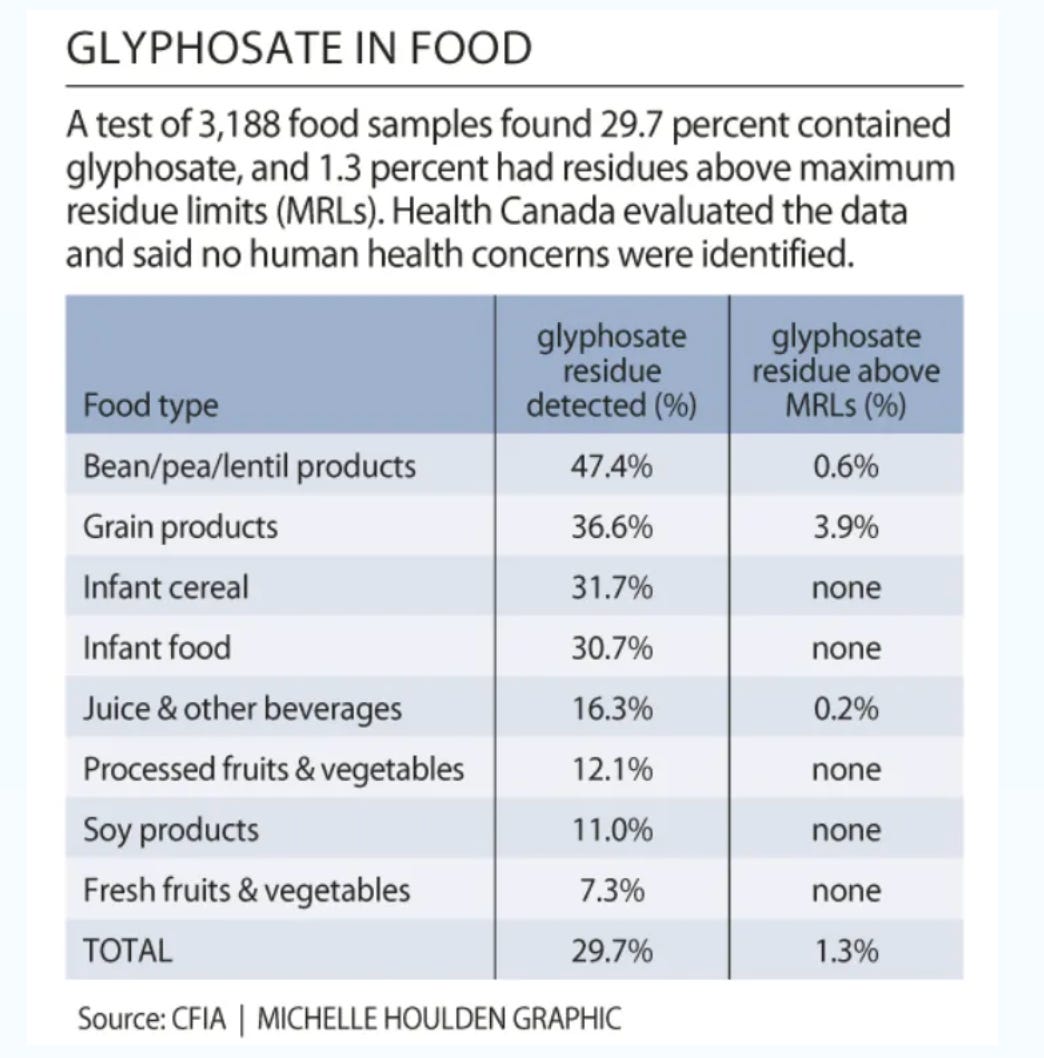
Urinary measurements do not identify what fraction of exposure results specifically from preharvest desiccation. Nevertheless, preharvest applications represent an identifiable exposure pathway that can be investigated and potentially eliminated.
And glyphosate is not the only chemical involved.
Other preharvest herbicides may leave residues in harvested commodities, depending on their application rates, chemical properties, crop metabolism, and time between treatment and harvest.
The Regulatory Question EPA Has Not Adequately Answered
Under federal pesticide law, EPA establishes residue tolerances using toxicological assessments, residue studies, estimated dietary exposure, and other evidence. These tolerances determine the maximum concentrations legally permitted in or on food.
Over time, some glyphosate tolerances have increased substantially.
For example, the tolerance for glyphosate residues in wheat grain increased from 5 parts per million in 2000 to 30 parts per million under the current regulation. The tolerance for oat grain increased from 20 to 30 parts per million, while the tolerance for field corn grain increased from 1 to 5 parts per million.
These are legal maximum concentrations, not measurements of typical residues in supermarket foods. Nor can every increase automatically be attributed to preharvest desiccation. Some changes reflect other registered agricultural uses.
But the regulatory history raises an important question.
When EPA evaluates a proposed preharvest application, it asks whether residues resulting from the authorized use can be considered safe under its established toxicological and dietary exposure framework.
What is less clear is whether EPA has systematically compared the dietary exposure resulting from preharvest desiccation against the exposure that would occur if the same crop were harvested without chemical treatment.
That is the comparison that matters for this policy question.
If wheat, oats, soybeans, or other food crops can be harvested without a late-season herbicide application, then the relevant question should not be limited to whether the resulting residues fall below an established regulatory ceiling.
It should also be whether the additional chemical exposure is necessary. A tolerance is permission for a certain level of residue. It is not proof that the residue was unavoidable.
Exposure to these chemicals needs to be limited in every way possible. Instead, the EPA sets exposure limits and walks away from the issue.
The Scientific Literature Is Raising Questions
For years, the debate over glyphosate has been dominated by arguments about carcinogenicity, particularly the disagreement between the International Agency for Research on Cancer and regulatory agencies that have reached different conclusions about cancer risks under evaluated exposure conditions.
But the research literature extends far beyond cancer.
Experimental studies have examined glyphosate and glyphosate-based formulations in relation to reproductive development, endocrine signaling, oxidative stress, the intestinal microbiome, neurological development, and other biological systems.
A 2022 study by Gerona and colleagues detected glyphosate in the urine of 186 of 187 pregnant women enrolled in a high-risk Indiana pregnancy cohort. Among the pregnancies included in the outcome analysis, higher first-trimester urinary glyphosate concentrations were associated with lower birth-weight percentiles.
A separate study by Lesseur and colleagues detected glyphosate and its degradation product AMPA in most maternal urine samples from a smaller multicenter pregnancy cohort. The investigators reported associations involving AMPA and anogenital distance in female infants, although some glyphosate associations did not remain statistically significant after adjustment.
These are observational studies. They cannot establish that glyphosate caused the outcomes, and they cannot identify preharvest spraying as the source of exposure.
Animal experiments provide additional mechanistic evidence. Studies have reported changes in ovarian steroidogenesis, sperm development, reproductive tissue structure, and endocrine signaling following glyphosate or glyphosate-based herbicide exposure.
A 2024 mouse study by Valente and colleagues found that mixtures of glyphosate and 2,4-D worsened certain reproductive abnormalities associated with a Western-style diet.
The exposure levels, formulations, and experimental conditions differ substantially among these studies. Some are relevant to low-dose exposure; others involve concentrations that cannot be directly equated with ordinary dietary residues.
Recent reviews published in 2025 have continued examining reproductive toxicity, endocrine effects, environmental contamination, and the potential importance of formulation ingredients that are not captured by testing glyphosate alone.
This growing literature is relevant to regulatory decisions because pesticide approvals necessarily involve judgments about uncertainty, exposure, and acceptable risk.
If a particular exposure pathway is not essential to producing food, the case for allowing it deserves renewed scrutiny.
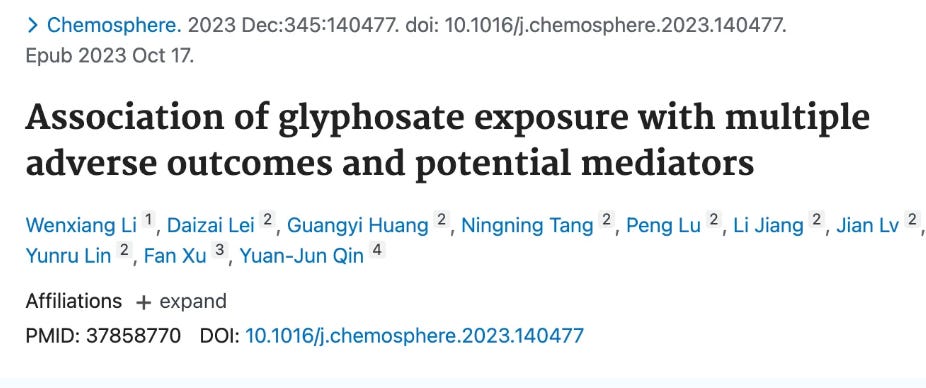
The data on urine GLY concentration and nine health outcomes, including type 2 diabetes mellitus (T2DM), hypertension, cardiovascular disease (CVD), obesity, chronic kidney disease (CKD), hepatic steatosis, cancers, chronic obstructive pulmonary disease (COPD), and neurodegenerative diseases (NGDs), were extracted from NHANES (2013-2016)
The findings of the study revealed that individuals with higher urinary concentrations of GLY had a higher likelihood of having T2DM (type 2 diabetes), hypertension, CVD and obesity (p < 0.001, p = 0.005, p < 0.001 and p = 0.005, respectively). In the reverse-scale Cox regression, a notable association was solely discerned between exposure to GLY and the risk of T2DM (adjusted HR = 1.22, 95% CI: 1.10, 1.36). Consistent outcomes were also obtained via logistic regression analysis, wherein the adjusted OR and 95% CI for T2DM were determined to be 1.30 (1.12, 1.52). Moreover, the present investigation identified serum high-density lipoprotein cholesterol (HDL) as a mediator in this association, with a mediating effect of 7.14% (p = 0.040). This mediating effect was further substantiated by RCS regression, wherein significant dose-response associations were observed between GLY exposure and an increased risk of T2DM (p = 0.002) and reduced levels of HDL (p = 0.001). Collectively, these findings imply an association between GLY exposure and an increased risk of T2DM in the general adult population.
The Environmental Damage Done
Food residues are only part of the story. Herbicides can move beyond the treated crop through runoff, drainage, erosion, and spray drift.
USGS monitoring has documented glyphosate in American streams and rivers. EPA ecological assessments have identified potential risks to nontarget plants and animals from several herbicides used in agriculture, including paraquat and diquat.
Aquatic plants and algae can be especially vulnerable to herbicides because the chemicals are designed to interfere with plant growth or survival. Some herbicides and formulations also affect aquatic invertebrates, fish, amphibians, and other organisms.
Healthy soil is not simply a medium that holds plant roots. It is a living ecosystem containing fungi, bacteria, protozoa, nematodes, earthworms, and countless other organisms involved in decomposition, nutrient cycling, and plant health.
Research has demonstrated that glyphosate exposure can alter soil microbial communities and biological processes. Agricultural chemicals do not necessarily remain confined to their intended targets, and repeated exposures can influence ecosystems in ways that extend beyond the immediate agricultural purpose and are difficult to measure.
There are also indirect effects. Herbicide-driven removal of vegetation can reduce habitat and food resources for insects and other invertebrates, with potential consequences for birds and other wildlife that depend on them.
Every unnecessary application adds to the overall chemical burden that agriculture places on the environment. Eliminating routine preharvest applications would remove one identifiable source of that burden.
We Already Know How to Harvest Without Chemical Desiccants
This is the practical point that makes a targeted policy possible.
Farmers do not need to rediscover agriculture to stop spraying herbicides immediately before harvest. Up until fairly recently, this was the standard operating procedure.
Wheat and other grains can mature and dry naturally. Crops can be swathed or windrowed where appropriate. Modern combines can harvest mature crops directly, and mechanical drying can be used when necessary.
Soybeans can also be harvested without chemical desiccation, as they routinely are in many operations. Preharvest treatments may help manage green weeds, uneven maturation, or particular harvesting conditions, but they are not an inherent biological requirement for soybean production.
Corn illustrates why precision matters. Although certain preharvest herbicide uses are registered, chemical desiccation of standing grain corn is not the universal or standard method of harvesting American corn. Much of the crop is allowed to senesce and dry naturally before combining.
Pre-harvest chemical desiccation is an optional agricultural intervention for which nonchemical harvesting alternatives already exist.
A Presidential Executive Order:
Three Years to End Preharvest Chemical Desiccation
President Donald Trump should immediately sign an Executive Order under the Make America Healthy Again (MAHA) initiative directing the Environmental Protection Agency (EPA) and the United States Department of Agriculture (USDA) to begin a three-year phaseout of routine preharvest chemical desiccation of food crops. This would include preharvest uses of glyphosate, paraquat, diquat, sodium chlorate, saflufenacil, and other herbicides and chemical desiccants registered for this purpose. The Executive Order would establish a clear federal policy and deadline, directing both agencies to use their existing statutory authorities to implement the transition.
The policy would be narrowly targeted. It would not prohibit herbicide use for weed management during the growing season, interfere with no-till agriculture, or require farmers to adopt new cultivation systems. Its purpose would be to eliminate an avoidable source of pesticide residues in the American food supply while reducing unnecessary chemical exposure in agricultural ecosystems. This is precisely the kind of practical, achievable reform that the MAHA initiative was established to pursue: reducing preventable chemical exposures while supporting American farmers and improving the quality of the nation’s food supply.
During the first year, President Trump’s Executive Order would direct EPA to initiate the regulatory process of withdrawing routine preharvest desiccation uses from pesticide registrations, following the applicable legal procedures. USDA would work with agricultural producers, extension services, and equipment manufacturers to prepare for the transition. Farmers would receive advance notice of the new requirements and time to adjust their harvesting schedules and management practices. The administration would establish a firm timetable, with public progress reports and clear agency accountability.
During the second year, restrictions would begin taking effect for crops where established nonchemical harvesting methods are readily available. Farmers would transition to natural maturation, field drying, swathing, and conventional mechanical harvesting, as appropriate for each crop. USDA would provide technical assistance to producers who need help adapting their operations. The objective would not be to impose an entirely new agricultural system, but to return to harvesting methods that have been successfully used for generations and remain in use today.
By the end of the third year, EPA would complete the necessary regulatory actions to prohibit routine preharvest chemical desiccation of food crops under federally approved pesticide labels, subject to applicable statutory requirements. Any narrowly defined emergency exceptions would require specific justification rather than becoming another avenue for routine use. Farmers would retain access to other lawful crop-management tools, but spraying herbicides onto mature food crops immediately before harvest would no longer be an accepted standard practice.
The research and regulatory review should support this transition, not become an excuse to postpone it indefinitely. During the phaseout, EPA and USDA should document the acreage currently receiving preharvest applications, measure pesticide residues in treated and untreated crops, and evaluate changes in dietary exposure. They should also review the history of EPA residue tolerances and minimum preharvest intervals, including whether previous approvals adequately considered the availability of nonchemical harvesting alternatives. Environmental monitoring should assess reductions in chemical releases to soil and waterways.
These studies would provide valuable information about the benefits of the policy, but the fundamental agricultural question has already been answered by generations of farmers: food crops can be grown and harvested without routine chemical desiccation. Certified organic grain production demonstrates that this remains commercially possible today. The federal government should not require another decade of research simply to begin reducing an avoidable source of chemical exposure.
President Trump has an opportunity to make this a concrete achievement of the MAHA agenda. Rather than another commission, another report, or another round of promises about cleaning up America’s food supply, an Executive Order would establish an immediate direction for federal policy, a defined transition period, and measurable objectives. The order could be signed now. The agencies would then be responsible for carrying out the required regulatory actions, assisting farmers, and documenting the results.
The federal government does not need to ban all agricultural herbicides, restructure American farming, or wait until every scientific controversy surrounding these chemicals has been resolved. EPA already has a regulatory framework for modifying pesticide registrations, and USDA has the expertise to help producers make the transition. A three-year phaseout would give farmers reasonable time to adapt while establishing a clear deadline for ending the practice.
The objective is simple: President Trump should sign the Executive Order, EPA should begin the regulatory phaseout, and USDA should help American farmers transition away from routine preharvest chemical desiccation. Three years would provide a defined timetable for making this change a national agricultural standard. This would be a tangible MAHA reform, reducing avoidable pesticide exposure in the American food supply rather than merely talking about it.
Stop Spraying Our Food. We Know How to Harvest Without Chemicals.
For decades, Americans have been assured that pesticide residues in their food are safe because they fall below limits established by federal regulators. But many of the toxicological studies underlying EPA’s pesticide safety assessments were conducted years or even decades ago, before advances in our understanding of endocrine disruption, developmental toxicity, reproductive health, the microbiome, and the potential consequences of chronic, low-dose chemical exposure. Although EPA periodically reassesses pesticide registrations and tolerances, the question remains whether those evaluations adequately incorporate the latest independent scientific research, particularly studies involving vulnerable populations, chemical mixtures, and long-term exposure.
Meanwhile, some legal residue tolerances have actually increased as agricultural practices have changed. This most likely was due to lobbying efforts by industry. Raising a permissible residue limit does not make the chemical less biologically active, nor does it demonstrate that greater exposure is beneficial or necessary. It means regulators have authorized more of that chemical to remain in the food supply. Consumers are expected to trust that the underlying risk assessments adequately protect their health, even as new research continues to raise questions about effects that earlier regulatory studies may not have fully examined.
But this entire regulatory arrangement avoids a far more fundamental question: Why are we allowing farmers to spray herbicides onto food crops immediately before harvest when those chemicals are not necessary to grow the food in the first place? Rather than endlessly debating how much chemical residue Americans should be expected to tolerate, perhaps it is time to eliminate agricultural practices that introduce avoidable residues into our food supply. The EPA should not merely be asking how much pesticide exposure is legally permissible. It should also be asking how much of that exposure is necessary at all.
Chemical desiccation was introduced largely to make harvesting faster, more predictable, and more economical. It was not a breakthrough that suddenly made wheat, oats, soybeans, and other crops capable of producing food. Farmers had been growing and harvesting these crops for generations without spraying them with herbicides shortly before harvest. Modern equipment has made harvesting more efficient than ever. Yet somewhere along the way, another chemical application became an accepted part of managing the harvest, and the resulting pesticide residues became something regulators were tasked with accommodating.
Consider what that means. Rather than asking whether these late-season applications are necessary, EPA increases the amount of chemical residue that may legally remain in our food. Rather than requiring the agricultural industry to demonstrate that the additional exposure is justified, regulators evaluate whether it falls within an acceptable risk calculation. And rather than making the elimination of avoidable exposure a public-health priority, the system permits the practice to continue as long as the resulting residues comply with federal standards.
Meanwhile, Americans are routinely exposed to glyphosate, and the scientific literature continues to raise questions about the effects of chronic exposure to herbicides and their formulations. These chemicals can also enter soil and waterways, affecting organisms that have nothing to do with the intended agricultural application. The consequences extend beyond the consumer’s dinner plate to the biological systems that sustain agricultural production itself.
The burden of justification should be on those who want to continue spraying herbicides onto food crops immediately before harvest, not on Americans who question why these chemicals are being applied at all. The ability to detect a chemical residue and declare it legally acceptable is not the same as demonstrating that the exposure was necessary, beneficial, or unavoidable.
The solution does not require another decade of committees, regulatory reviews, and scientific arguments over precisely how much exposure might be acceptable. It requires a clear federal policy, a reasonable three-year transition period, and the willingness to eliminate a particular agricultural practice that has established nonchemical alternatives. EPA can begin the regulatory process of withdrawing preharvest desiccation uses from pesticide registrations, while USDA helps farmers adapt their harvesting operations. The agencies can measure changes in food residues, human exposure, and environmental contamination as the phaseout proceeds.
American farmers knew how to harvest crops before chemical desiccation became an established practice. They still know how. Certified organic grain producers demonstrate that food can be grown and harvested commercially without prohibited synthetic preharvest herbicides. There is no need to confuse this proposal with banning all pesticides, abandoning modern agriculture, or returning to labor-intensive farming methods. It is a targeted effort to eliminate a source of chemical exposure that is not essential to producing the crop.
For too long, the debate has centered on how much pesticide residue Americans should be expected to tolerate. It is time to ask why they should be expected to tolerate residues from an avoidable preharvest application at all.
The EPA should begin a three-year phaseout of routine preharvest chemical desiccation of food crops. USDA should support farmers through the transition. The agricultural industry should be expected to adapt, just as it has adapted to countless changes in technology and agricultural practice.
We do not need to keep spraying herbicides on food just because we have become accustomed to doing it. We know how to harvest without them. It is time to stop.
Help Put This Proposal Before Federal Decision-Makers
This article proposes a specific federal policy: a presidential Executive Order directing EPA and USDA to begin a three-year phaseout of routine preharvest chemical desiccation of food crops.
Readers who believe this proposal deserves serious consideration can help bring it to the attention of the White House, EPA leadership, USDA, and HHS. Share this article, include the link in your correspondence, and ask federal officials to review the evidence and respond to the proposed policy.
The objective is to move this discussion beyond social media and into the offices responsible for agricultural regulation, food safety, and public health.
Federal Contacts: Preharvest Desiccation Policy
Official government contact channels
1. The White House — President Donald Trump
The White House, 1600 Pennsylvania Avenue NW, Washington, DC 20500
Submit a message to the President
The White House prefers its online contact form over postal mail.
2. EPA — Office of Pesticide Programs
1200 Pennsylvania Avenue NW, Mail Code 7506C, Washington, DC 20460
pesticidequestions@epa.gov
Appropriate for questions and recommendations concerning pesticide registrations and preharvest uses.
3. USDA — Office of the Secretary
U.S. Department of Agriculture, 1400 Independence Avenue SW, Washington, DC 20250
askusda@usda.gov
USDA’s general inquiry channel; requests can be directed toward agricultural transition assistance.
4. HHS — Secretary Robert F. Kennedy Jr.
Secretary Robert F. Kennedy Jr.,
U.S. Department of Health and Human Services,
200 Independence Avenue SW,
Washington, DC 20201
HHS specifically instructs members of the public to submit policy suggestions to the Secretary by letter.
5. HHS — Assistant Secretary for Planning and Evaluation
200 Independence Avenue SW, Room 415F, Washington, DC 20201
osaspeinfo@hhs.gov
A policy-analysis office within HHS, with a published public inquiry address.
Help Keep Independent Journalism Alive.
Become a Paid Subscriber.
This article is more than an examination of agricultural chemicals. It is a call for a specific policy change that could reduce unnecessary pesticide exposure in our food supply. The research, regulatory history, and proposed three-year phaseout deserve serious consideration by the White House, EPA, USDA, and HHS leadership. But getting these ideas in front of decision-makers requires independent journalism that is willing to ask difficult questions and challenge established practices.
That is what we do at Malone News. We investigate issues that are too often ignored, examine the underlying science, and propose practical solutions rather than simply reporting problems. This work takes time, resources, and a willingness to challenge powerful institutional and commercial interests. We do not depend on pharmaceutical companies, agricultural chemical manufacturers, or government grants to tell us what we can investigate or publish.
If you are reading for free, or you are already a free subscriber, please consider becoming a paid subscriber today. Your support makes this research possible, helps us reach a wider audience, and allows us to continue publishing independent reporting without putting our work behind a paywall for everyone.
If you believe Americans deserve cleaner food, honest science, and federal regulators who put public health first, please support the journalism that is willing to make that case. Become a paid subscriber to Malone News today.
Thank you for reading, sharing our work, and helping us make a difference.
References
Benbrook CM. Trends in glyphosate herbicide use in the United States and globally. Environmental Sciences Europe. 2016;28:3.
U.S. Department of Agriculture, National Agricultural Statistics Service. Agricultural Chemical Use Program. USDA.
U.S. Environmental Protection Agency. Glyphosate; Tolerances for Residues. 40 CFR §180.364.
U.S. Environmental Protection Agency. Draft Human Health and Ecological Risk Assessments for Glyphosate. 2017.
U.S. Environmental Protection Agency. EPA Releases Glyphosate Human Health Open Literature Search Document for Public Feedback. August 25, 2026.
Canadian Food Inspection Agency. Safeguarding with Science: Glyphosate Testing in 2015–2016. Ottawa: CFIA; 2016.
Ospina M, Schütze A, Morales-Agudelo P, et al. Exposure to glyphosate in the United States: Data from the 2013–2014 National Health and Nutrition Examination Survey. Environment International. 2022;170:107620.
Li W, Lei D, Huang G, et al. Association of glyphosate exposure with multiple adverse outcomes and potential mediators. Chemosphere. 2023;345:140477.
Gerona RR, Reiter JL, Zakharevich I, et al. Glyphosate exposure in early pregnancy and reduced fetal growth: A prospective observational study of high-risk pregnancies. Environmental Health. 2022;21:95.
Lesseur C, Pirrotte P, Pathak KV, et al. Maternal urinary levels of glyphosate during pregnancy and anogenital distance in newborns in a US multicenter pregnancy cohort. Environmental Pollution. 2021;280:117002.
Chitolina R, Nicola P, Sachett A, et al. Subacute exposure to Roundup changes steroidogenesis and gene expression of the glutathione-glutaredoxin system in rat ovaries: Implications for ovarian toxicity of this glyphosate-based herbicide. Toxicology and Applied Pharmacology. 2023;473:116599.
U.S. Environmental Protection Agency. Preliminary Ecological Risk Assessment for the Registration Review of Paraquat. June 26, 2019.
U.S. Environmental Protection Agency. Glyphosate: Ecological Health and Registration Review.
U.S. Environmental Protection Agency. Paraquat Dichloride: Ecological Health and Registration Review.
Thank you so much for writing this article. I just read and forwarded to many of my friends. This is truly my number one daily concern for my family. Health is number one. Without it you have nothing. I feel like MAHA is dead. To have RFK jr. defend glyphosate on Joe Rogan or at least say there are bigger fish to fry, literally destroyed my belief that this will ever be righted for the American people. That man spend 30 years of his life helping those against the malfeasance of the use of glyphosate and for him to blow it off and move on just killed me. How do we help those who can make real change see the horrific consequences the use of these chemicals and practices will bring to our young children? When are they going to finally choose health over making money? In the end, like you said, this isn't necessary for crops its just a convenience for harvest and profit making. Where can I go to help make a difference?
As a person who's been in agriculture since the early 1980s, and finding out about using glyphosate being used to desiccate crops prior to harvest, I was shocked. I couldn't believe that agriculture had come to stooping *that* low.
But I'm biased, I've been in the Organic sector for so long now that I shouldn't any longer be shocked at what they do in the conventional sector.
I don't know how to say this other than people need to support certified organic farming. It's really that simple. All the regulations and policy are already there. It's not perfect though I know.
Just been disking soil to plant a mix of oats and crimson clover. Yep, disking, which exposes soil - and the earth's aroma is wonderful. Need to disk since we don't use sprays of any type at any time. Burn diesel fuel ($6.50/gal now) but the 20 acres will have oats and clover with no fungicides or other -cides.
Farming without chemicals can be done and it starts with what's between one's ears.